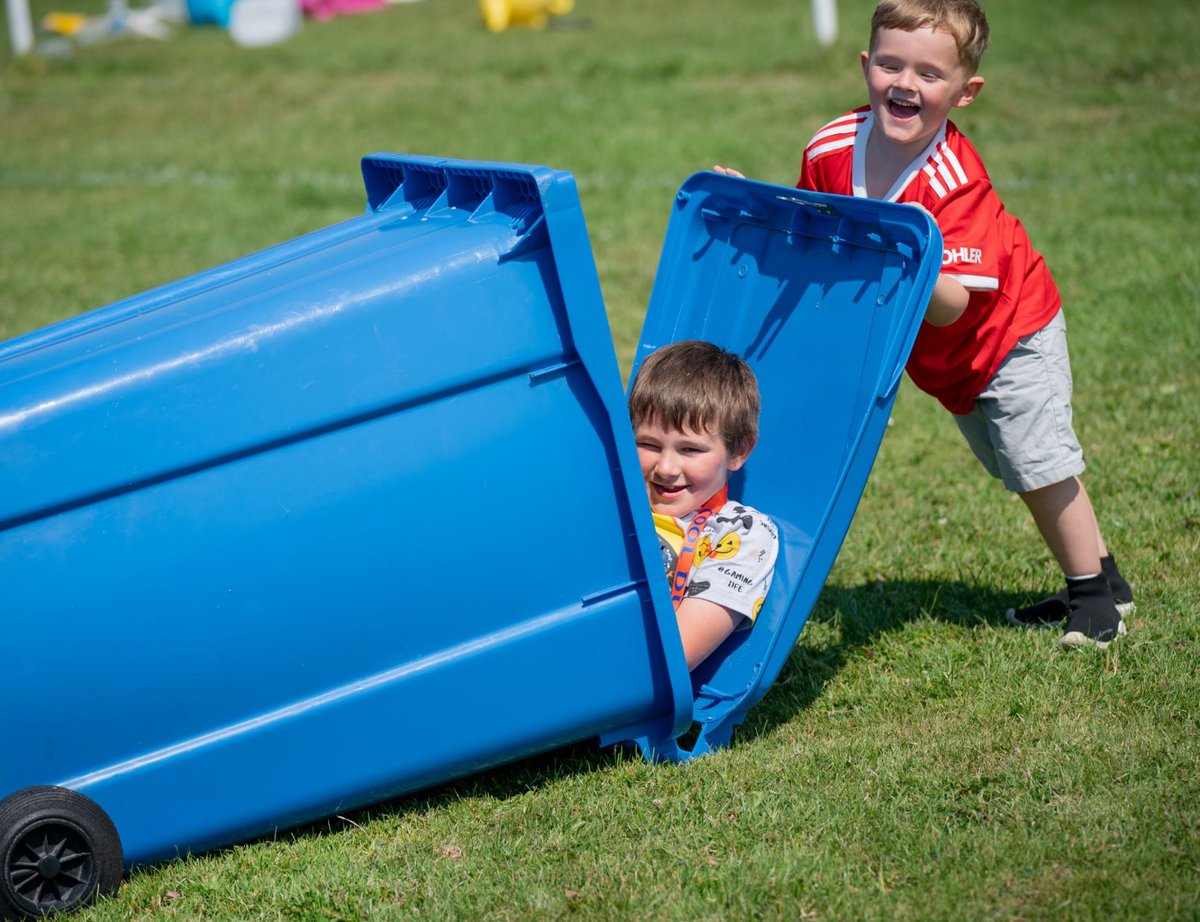
In a world increasingly focused on academics, screens, and structured activities, it's easy to overlook one of the most powerful, yet simplest, drivers of child development: play. Childhood Play & Recreation isn't just about fun and games; it's a fundamental biological drive, a universal right, and the primary mechanism through which children explore, learn, and master the complex world around them. From a baby’s first delighted giggle during peek-a-boo to a group of preschoolers building an imaginary fort, every moment of play is a crucial building block for physical, cognitive, social, and emotional growth, laying the groundwork for a healthy, capable adult.
At a Glance: Why Play is Essential
- Brain Booster: Play sculpts healthy brain architecture, forming vital neural connections.
- Skill Builder: It's a natural laboratory for practicing new skills and ideas, from language to problem-solving.
- Social Connector: Play teaches children how to interact, share, resolve conflicts, and build lasting relationships.
- Emotional Outlet: It provides a safe space for children to explore fears, practice adult roles, and process emotions.
- Physical Catalyst: Active play encourages movement, strengthens bodies, and develops coordination.
- Stress Reducer: Play helps children relax, unwind, and cope with daily stressors, promoting mental well-being.
Beyond "Just Playing": The Profound Science of Child Development Through Recreation
For decades, experts have underscored play's irreplaceable role in a child's life. The United Nations recognizes play as a child's fundamental right, a testament to its universal importance. The American Academy of Pediatrics (AAP) consistently highlights how play supports healthy brain development, enables environmental interaction, allows children to safely explore fears, practice adult roles, and build crucial relationships with peers and caregivers.
At its core, play is an activity that is fun, engaging, and freely chosen. While adults might provide the opportunities—a box of blocks, a swing set, or simply a sunny afternoon—the child drives the "how" and "what." This autonomy is critical. Before play can truly begin, there's often an initial stage called exploration. This is where a child discovers what an object is and does—mouthing a toy, shaking a rattle, pushing a button. Once that understanding clicks, they can then engage with it for pure enjoyment, deepening their knowledge through the very act of play itself.
Pioneering Thinkers: Understanding How Play Teaches
The concept of learning through play isn't new. Legendary developmental psychologists offered profound insights that continue to shape our understanding:
* **Jean Piaget (1896–1980):** Piaget believed children are active learners, constructing their understanding of the world by directly engaging with it. For him, play was the most vital method for children to practice new skills, test ideas, and assimilate new information into their developing cognitive structures. Children aren't just passive recipients of knowledge; they are little scientists, experimenting through play.
* **Lev Vygotsky (1896–1934):** Vygotsky emphasized the critical role of social interaction and adult guidance. He introduced two powerful concepts:
* **Zone of Proximal Development (ZPD):** This refers to the sweet spot between what a child can achieve independently and what they can accomplish with a little help from a more knowledgeable adult or peer. It's where optimal learning occurs.
* **Scaffolding:** Imagine building a house – scaffolding provides temporary support. In play, adults provide "scaffolding" by offering just enough assistance to help a child master a skill within their ZPD. This could be as simple as adjusting a baby's arm to help them roll over, or offering a hint during a puzzle.
These theories aren't just academic; they underscore why thoughtful adult involvement, even in child-led play, can be so impactful.
The Many Dimensions of Play: What Childhood Recreation Looks Like
Play isn't a monolithic activity; it manifests in countless forms, each contributing uniquely to development. The nature of play is deeply influenced by cultural norms and home life, affecting everything from how much free time children have, to whether they lean towards cooperative or competitive activities, and even their preference for store-bought versus homemade toys. Play is a powerful conduit for children to absorb family values, learn interaction methods, and understand the language and objects of their community.
Mastery Play: The Drive to Understand and Conquer
This type of play is all about practice and understanding. Children use mastery play to solidify their grasp of concepts and skills.
* **Object Permanence:** Around 8-10 months, babies start to understand that objects still exist even when they can't see them. Games like peek-a-boo are perfect for mastering this concept, thrilling them with the reappearance of a familiar face.
* **Cause and Effect:** From an infant crying for comfort and understanding they will be picked up, to a toddler learning that pushing a ball makes it roll, children use play to test boundaries and predict outcomes. This foundational understanding is crucial for problem-solving later on.
Dramatic Play & Pretend Play: Stepping Into Other Shoes
Watch a child "feeding" a doll, pretending to be a doctor, or soaring around the room like an airplane. This is dramatic play, where children practice adult roles and routines. It’s incredibly valuable for:
* **Social Scripting:** Rehearsing conversations, negotiating roles, and understanding social expectations.
* **Empathy:** Imagining what it feels like to be someone else.
* **Language Expansion:** Using new vocabulary and narrative structures.
* **Emotional Processing:** Playing out situations, both real and imagined, to make sense of their feelings.
Caregivers can provide simple props—old clothes, pots and pans, cardboard boxes—to fuel this imaginative fire.
Rough and Tumble Play: The Energetic Dance of Interaction
Characterized by chasing, wrestling, giggling, running, and playful "fighting," rough and tumble play might look chaotic, but it's a vital part of development. It needs supervision to ensure safety and enjoyment, but the benefits are immense:
* **Physical Strength and Coordination:** Developing gross motor skills, balance, and agility.
* **Social Cues:** Learning to read body language, understand boundaries ("that's too rough!"), and negotiate turn-taking.
* **Emotional Regulation:** Managing excitement and frustration, and learning self-control.
* **Stress Release:** A fantastic way to burn off excess energy and reduce tension.
This energetic play can be particularly appealing and beneficial for children who might find it challenging to join more structured group activities, offering an inclusive avenue for interaction and development. The history of childhood play reveals many shifts, often influenced by societal norms and available resources. For instance,
Explore Gen X boy culture to see how the landscape of recreation changed for a generation raised with different pressures and fewer digital distractions.
Play's Transformative Power: Building Key Developmental Skills
Every splash in a puddle, every block tower built, every imaginary tea party contributes to a child's holistic development.
Forging Bonds & Friendships: The Social Heart of Play
Play is the earliest language of connection.
* **Caregiver Relationships:** Even tiny infants engage in "back-and-forth" interactions—eye contact, smiles, coos—with caregivers. These are the first steps of a relationship, and a nurturing bond significantly enhances a baby's play skills and willingness to explore.
* **Peer Relationships:** As infants become toddlers, they show increasing interest in other babies. Opportunities for joint play, even if it's "parallel play" (playing alongside each other rather than directly together), help them form early friendships and navigate group dynamics.
Mastering Social Graces: Learning to Share the World
Social skills aren't innate; they're learned through repeated interactions, and play is the perfect classroom.
* **Practicing Adult Roles:** As mentioned with dramatic play, children use pretend scenarios to rehearse social scripts and understand the nuances of various roles within a community.
* **Turn-Taking & Negotiation:** While young infants and toddlers can't be expected to share a single desired toy, older toddlers can be guided toward turn-taking. Adults can offer solutions during conflicts over toys, suggesting trading or waiting for a turn, fostering early negotiation skills. This early practice of social negotiation and cooperation is vital for later life, regardless of whether you're navigating playground dynamics or adult responsibilities. Considering how different generations approached these social lessons, it's fascinating to
Explore Gen X boy culture and understand how play shaped their collaborative and competitive instincts.
Unlocking the World's Mysteries: Problem-Solving Through Discovery
Play constantly presents children with "problems" that encourage them to develop new skills to continue.
* **Independent Discovery:** When a block tower tumbles, a child learns about gravity. When they try to fit a square peg in a round hole, they learn about shapes. Adults should resist the urge to immediately solve every challenge. Allowing children to experience frustration and discover solutions independently builds resilience and critical thinking.
* **Strategic Intervention:** Intervene for safety or if a child is truly stuck and becoming overly distressed. Otherwise, let them experiment. This self-directed learning approach fuels curiosity and a love for discovery.
A Springboard for Language: The Sounds of Learning
Language blossoms in playful environments.
* **Sound Play:** Babies delight in experimenting with sounds, and when adults repeat those sounds, it becomes an early form of conversation. This back-and-forth establishes the rhythm and expectation of dialogue.
* **Vocabulary Expansion:** Exposure to songs, rhymes, and playful language (e.g., "The sleepy bear is *snoring*") significantly enhances vocabulary and understanding.
* **Open-Ended Conversations:** In pretend play, adults can use open-ended questions like, "Where is your car going now?" or "What should the teddy bear eat?" This encourages children to think, elaborate, and express themselves more fully, boosting both imaginative and verbal skills.
Moving & Growing: Physical Development Through Active Play
Active physical play is not just fun; it's crucial for physical health and motor skill development. It naturally motivates babies and toddlers to learn new ways to use their bodies.
* **NASPE Recommendations:** The National Association for Sports and Physical Education (NASPE) recommends at least 30 minutes daily of physically active play for infants and toddlers. They also advocate for limited time in restrictive devices like car seats and swings, emphasizing the importance of supervised tummy time and ample opportunities for free movement.
* **Building Core Strength:** Rolling, crawling, walking, climbing, and running all contribute to developing gross motor skills, balance, and coordination. These activities are foundational for all future physical endeavors, from playing sports to simply navigating the world with confidence.
Nurturing Play: How Adults Can Create Rich Environments
Parents and caregivers are the chief architects of a child's play environment. You don't need expensive toys or elaborate setups; thoughtful support goes a long way.
* **Provide Opportunities, Not Just Items:** Offer varied materials like cardboard boxes, blankets, natural items (leaves, stones), and simple art supplies. These open-ended materials spark imagination far more than single-function toys.
* **Be a Play Partner (When Invited):** Engage in back-and-forth play with infants. For toddlers and preschoolers, follow their lead. Join their imaginary worlds, ask questions, and provide suggestions only if they seem stuck. Avoid directing their play too much.
* **Offer "Just Right" Challenges (Scaffolding):** If a child is struggling with a puzzle, offer a hint. If they're trying to build a tall tower that keeps falling, suggest a wider base. This small bit of support helps them learn without taking over.
* **Allow for Frustration (Within Limits):** It's tough to watch your child struggle, but letting them work through a problem builds resilience. Only step in if safety is an issue or they're genuinely overwhelmed.
* **Embrace the Mess:** Play is often messy. Whether it's mud pies or paint, these experiences are rich in sensory input and learning.
* **Limit Screen Time:** While digital tools have their place, excessive screen time can displace active, imaginative, and social play. Prioritize opportunities for real-world interaction.
* **Understand Cultural Nuances:** Recognize that play is influenced by culture. What's considered appropriate or valuable play can differ across communities. Be sensitive to these variations in your approach.
Gymboree Play & Music: A Structured Approach to Developmental Play
For those seeking structured environments that prioritize developmental play, programs like Gymboree Play & Music offer a compelling model. Founded in 1976, Gymboree operates on the research-backed principle that stretching a child’s rapidly developing mind and body fundamentally prepares them for life. They understand that a staggering 80% of the brain's neural connections are formed by age three, highlighting the profound impact of early childhood relationships and experiences.
Gymboree’s programs are:
* **Research-based:** Developed by experts in early childhood development to ensure activities align with developmental milestones.
* **Child-led:** Their "Play-osophy" emphasizes building on individual abilities, allowing children to explore at their own pace.
* **Innovative:** Featuring proprietary equipment specifically designed to inspire learning through age-appropriate physical and cognitive challenges.
They offer age-appropriate classes for children from birth to five years, integrating activities that foster physical, cognitive, and social skills:
* **Infant (0-8 Months):** Parent/child classes focus on crucial sensory exploration and visual/auditory development, laying the earliest foundations for learning and bonding.
* **Baby (6-18 Months):** These classes build strength through play, supporting overall growth, self-esteem, and communication skills as babies become more mobile and interactive.
* **Toddler (10-28 Months):** Interactive games, free play, and music encourage problem-solving skills, social interaction, and early independence.
* **Preschooler (22 Months-5 Years):** These programs teach foundational skills essential for Preschool and Kindergarten, while critically integrating ample time for imaginative play and creativity, acknowledging that even structured learning benefits from free exploration. The kind of structured yet playful learning environment offered by Gymboree contrasts interestingly with the more self-directed, often outdoor-focused recreation that defined previous generations. To gain perspective, one might
Explore Gen X boy culture and how their childhood activities shaped their development, then compare it to the modern approach.
These programs exemplify how intentional design can amplify the inherent benefits of play, offering a supportive environment for both children and caregivers to learn and grow.
Common Questions About Childhood Play & Recreation
Navigating the world of childhood play often brings up practical questions for parents and caregivers.
Do kids need expensive, "educational" toys to play effectively?
Absolutely not. The most valuable play often happens with the simplest, most open-ended materials. Cardboard boxes, blankets, measuring cups, pots and pans, natural items like sticks and stones, playdough, and art supplies are often far more stimulating for imagination and problem-solving than expensive, single-function toys. The key is imagination and interaction, not the price tag.
How much screen time is too much, and how does it impact play?
Expert recommendations vary slightly by age, but generally, screen time should be limited, especially for very young children. The AAP recommends avoiding screen media (other than video-chatting) for children younger than 18 to 24 months. For those 2-5 years, it suggests limiting non-educational screen use to 1 hour per weekday. Excessive screen time can displace active, creative, and social play, hindering development in areas like language, gross motor skills, and social-emotional regulation. Prioritize real-world, interactive play over passive screen consumption.
What if my child doesn't seem interested in playing?
First, observe them. Are they exploring quietly? Are they engaging in parallel play? Not all play is boisterous. If a child seems consistently disengaged, consider:
* **Their environment:** Is it too cluttered or too sparse? Do they have age-appropriate, open-ended materials?
* **Their energy levels:** Are they tired or overstimulated?
* **Your involvement:** Are you offering to play, or are you too directive? Sometimes simply being present and available is enough.
* **Underlying issues:** If persistent, and accompanied by other developmental concerns, consult with a pediatrician or child development specialist.
Sometimes children need a little nudge or an invitation. Simple prompts like, "Let's see if we can build the tallest tower!" or "What sound does this car make?" can ignite their interest.
The Lasting Legacy: Empowering Healthy Futures Through Play
The seemingly simple acts of **Childhood Play & Recreation** are, in reality, complex laboratories where children forge their understanding of the world, practice essential life skills, and build the relationships that will define their emotional landscape. From the earliest sensory explorations of infancy to the intricate dramatic play of preschoolers, every moment contributes to a child's holistic development.
By recognizing play as a biological imperative, a fundamental right, and the most effective way children learn, we empower them with far more than just happy memories. We equip them with resilience, creativity, social competence, and a lifelong love of learning. As caregivers, our role isn't to meticulously plan every moment but to provide opportunities, offer gentle guidance, and above all, create a nurturing environment where the magic of play can freely unfold. Because in the freedom of play, children discover not just the world, but themselves. The lessons learned during free-form activities can carry through for decades, shaping individuals and generations. It’s insightful to
Explore Gen X boy culture to see how the spirit of independent play and discovery resonated through an entire demographic, influencing their approach to problem-solving and social interaction later in life. Let's champion childhood play, ensuring every child has the space, time, and freedom to play their way to a healthier, happier future.